Inhibition of miR-92a normalizes vascular gene expression and prevents diastolic dysfunction in heart failure with preserved ejection fraction
Abstract:
Highlights
-
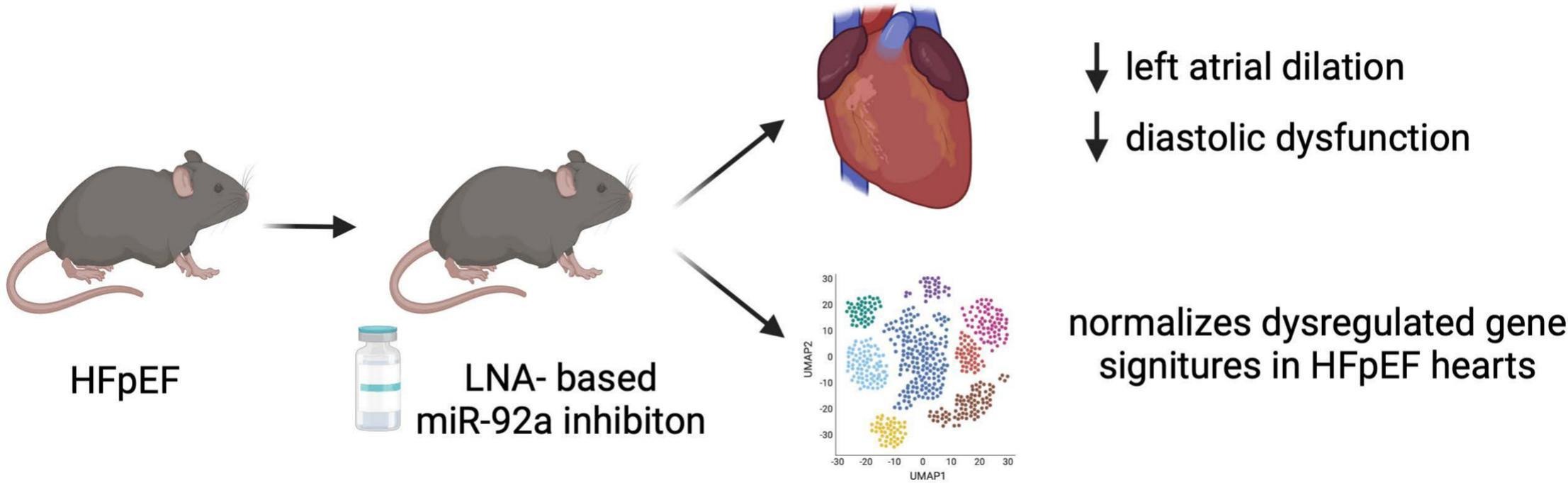
Inhibition miR-92a ameliorates diastolic dysfunction and left atrial enlargement in HFpEF hearts.
-
Locked nucleic acid (LNA)-based antimiR (LNA-92a) treatment results in effective inhibition of miR-92a and cell-type specific modulation of selected miR-92a target genes.
-
MiR-92a inhibition normalizes vascular gene expression and dysregulated gene signatures in HFpEF hearts.
-
Targeting miR-92a or its downstream effectors may hold therapeutic potential for managing HFpEF disease.
Heart failure with preserved ejection fraction (HFpEF) remains a major public health burden with increasing prevalence but only few effective therapies. Endothelial dysfunction and inflammation are identified as pathophysiological drivers of HFpEF disease progression. MicroRNAs are increasingly recognized as key regulators of these pathological processes, while antimiR-based therapies have been emerged as promising therapeutics in mice and humans. Therefore, we tested whether miR-92a-3p inhibition is a promising therapeutic intervention to target HFpEF in vivo.
By injection of locked nucleic acid (LNA)-based antimiR (LNA-92a) weekly, we demonstrate that inhibition of miR-92a-3p attenuates the development of diastolic dysfunction and left atrial dilation following experimental induction of HFpEF in mice. Indeed, LNA-92a depleted miR-92a-3p expression in the myocardium and peripheral blood, and derepressed predicted target genes in a cell type-specific manner. Furthermore, cell-type specific efficacy of LNA-92a treatment was assessed by single-nuclear RNA sequencing of HFpEF hearts either treated with LNA-92a or LNA-Control. Endothelial cells of LNA-92a treated mice showed normalized vascular gene expression and reduced gene signatures associated with endothelial-mesenchymal transition.
Conclusion
This study demonstrates that LNA-based antimiR-92a is an effective therapeutic strategy to target diastolic dysfunction and left atrial dilation in HFpEF.
Read the full publication: Inhibition of miR-92a normalizes vascular gene expression and prevents diastolic dysfunction in heart failure with preserved ejection fraction – ScienceDirect
Badder Kattih, Ariane Fischer, Marion Muhly-Reinholz, Lukas Tombor, Luka Nicin, Sebastian Cremer, Andreas M. Zeiher, David John, Wesley Tyler Abplanalp, Stefanie Dimmeler
Originally published in January 2025. ScienceDirect.